Home / Brazilian Jiu-Jitsu
Brazilian
Jiu-Jitsu
The gentle art. A martial art built on leverage and timing rather than size and strength — which is exactly why it works, and why anybody can learn it.
The art
Leverage beats
strength
Brazilian Jiu-Jitsu is a grappling art. There is no striking. The whole discipline is about closing distance, taking the fight to the ground, and using position, angle and leverage to control a larger and stronger person until they have no good options left.
That sounds abstract until the first time a smaller, calmer training partner takes your back with almost no visible effort. Jiu-jitsu is unusually honest: you find out immediately whether a technique works, because your partner is genuinely resisting. There is no belt you can talk your way into.
It is also, for most people who stick with it, the most engaging fitness they have ever done. You will get strong, mobile and conditioned — but as a side effect of solving problems, not from counting reps.
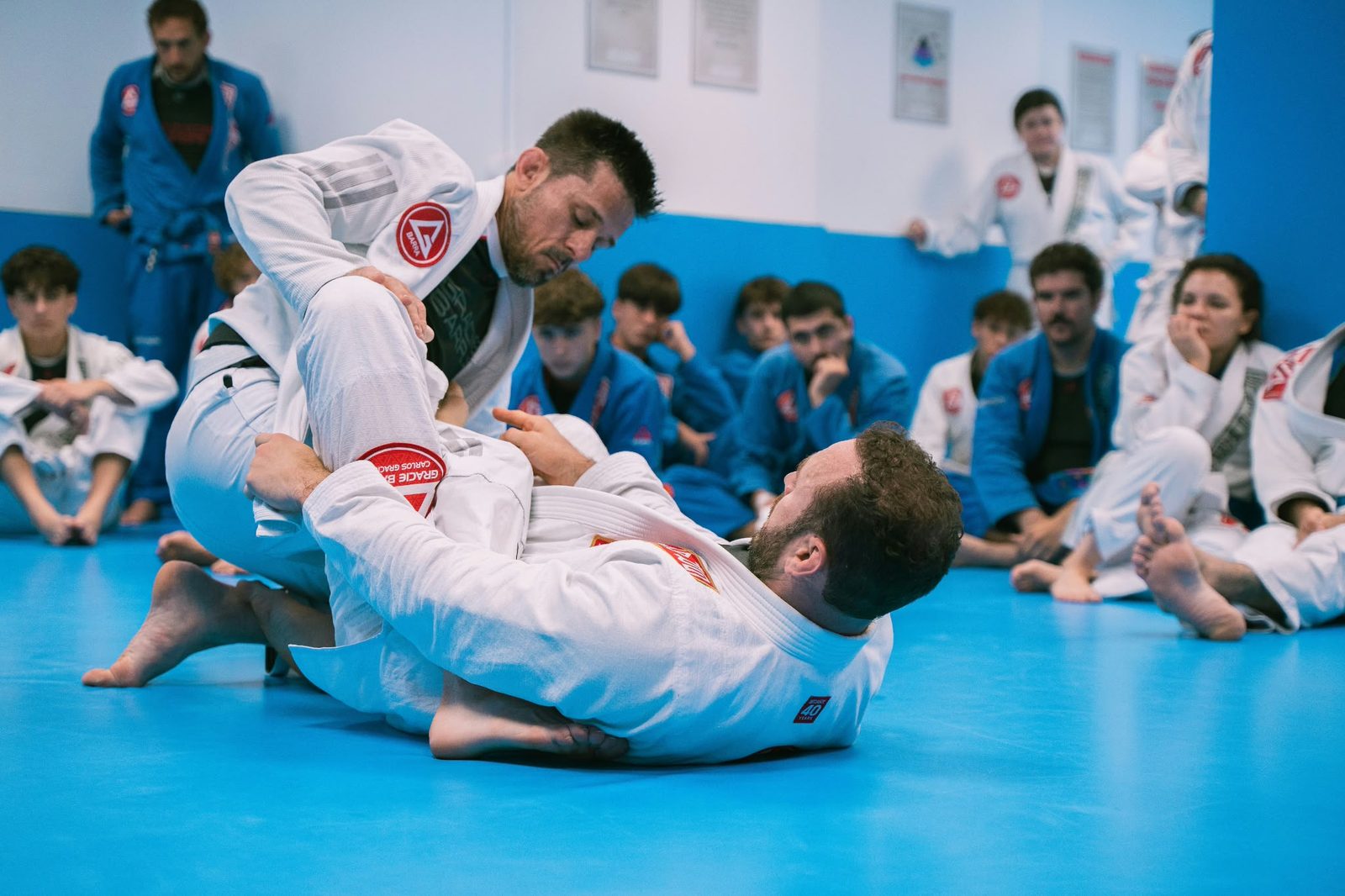
Technique is demonstrated, broken down and drilled — then pressure-tested.
The curriculum
A structured
programme, not
a move of the week
Gracie Barra teaches the same organised curriculum in every one of its schools. Techniques are sequenced so that each one supports the next, and the syllabus repeats on a cycle — so if you miss a week you have not missed a chapter forever.
GB1 — Fundamentals
The foundation programme, and where every new adult starts. A fixed syllabus of core positions, escapes, sweeps and submissions, taught at a controlled pace with an emphasis on doing things correctly rather than quickly. Many students keep a fundamentals class in their week for years.
GB2 — Advanced
For students who have the fundamentals in their body. Deeper technical chains, combinations and counters, more takedown work, and significantly more live training. Higher pace, higher expectations, same coaching standards.
GB3 — Black Belt
The Gracie Barra black belt programme — refinement, teaching methodology and the finer points of the art for the most senior students in the academy.
No-Gi
Same art without the jacket. Grips disappear, the pace rises, and control has to come from position and pressure. Excellent for anyone interested in MMA, and a useful stress-test of your gi game.
Competition Training
For students who want to test themselves at tournaments: sharper conditioning, long rounds, rule-set specifics, weight management and match strategy. Competing is always optional at Gracie Barra.
Women’s Class
A women-only session on the schedule for anyone who would prefer to start that way. Same curriculum, same standards — a different room to walk into on your first day.
Which of these run at Leonia in week one depends on demand. Tell us what you want on the pre-registration form and it shapes the opening schedule.
Progression
The belt system
Adults progress white → blue → purple → brown → black, with four stripes available at each belt. Children have their own coloured belt system, and transition into the adult belts as teenagers.
Jiu-jitsu belts are famously slow. A blue belt typically represents a year or two of consistent training; black belts are usually a decade or more. That is a feature, not a bug — the rank means something because it cannot be rushed, and progress is measured in what you can actually do against a resisting partner.
Promotions at Gracie Barra consider technical knowledge, attendance, attitude on the mat and the way you treat your training partners. Being useful to the people around you counts.
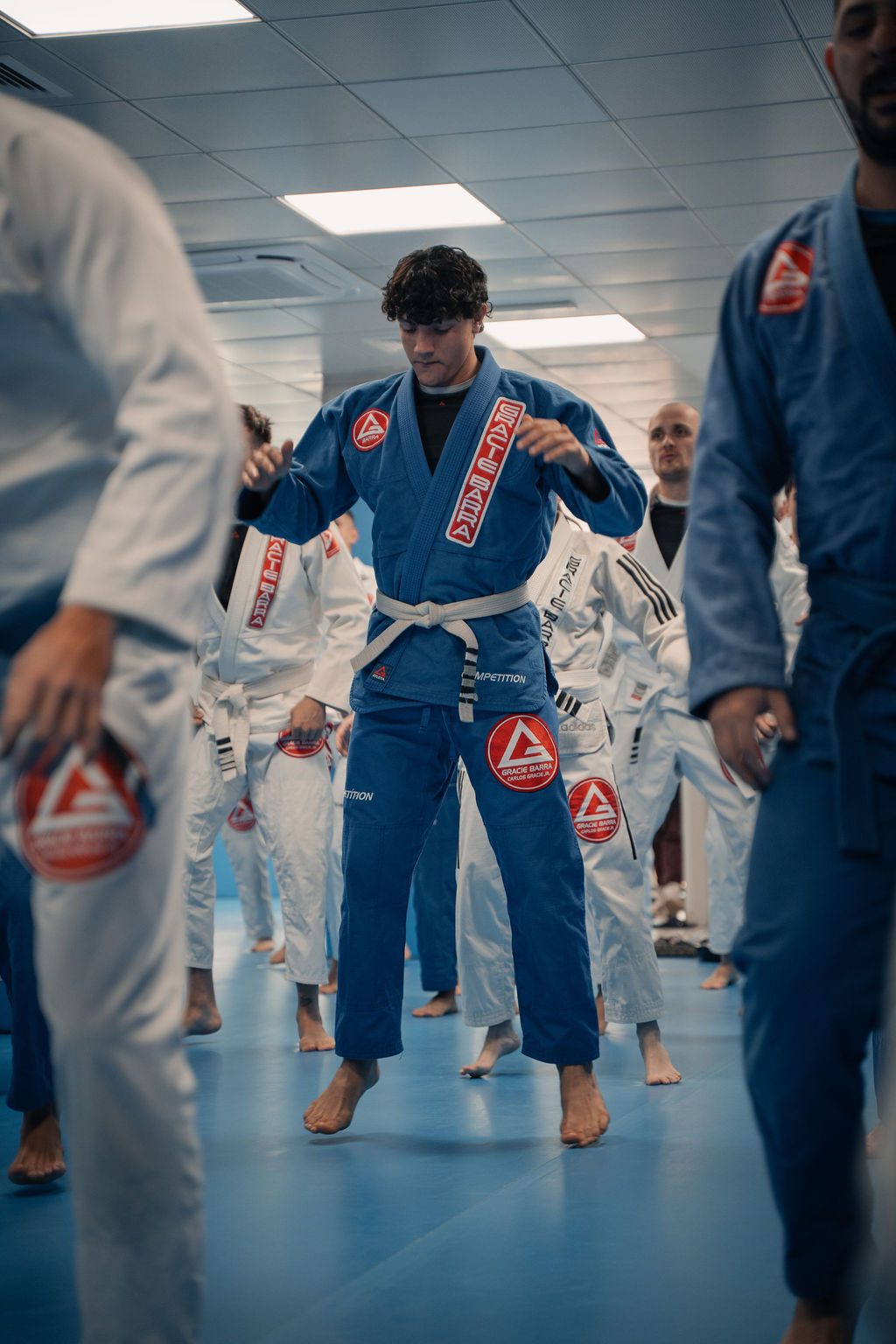
Promotions are done in front of the whole academy. It is a good day.
Who trains
“Jiu-Jitsu for Everyone”
is meant literally
Complete beginners
The single most common thing we hear is “I want to get in shape first.” You do not. Everyone in the room started with a first class where they understood nothing. Come as you are.
Parents who watch and then join
An extremely common route. You bring your child twice a week, you watch from the viewing area for two months, and eventually you get bored of watching.
Anyone with a self-defence reason
Jiu-jitsu is the art you want if the situation goes to the ground. It teaches control and de-escalation, and it works without needing to hurt anyone.
Former athletes
Wrestlers, judoka, rugby players and lifters tend to fall in hard. The competitive outlet is there whenever you want it.
People over 40
Train at the intensity you choose. Plenty of people start jiu-jitsu in their forties and fifties and are still on the mat twenty years later.
Women
Around a third of new starters at many Gracie Barra schools are women. A women’s class gives you an easier front door if you want one.
Practical
What you need
First class
Athletic shorts with no pockets, zips or drawstring toggles, and a t-shirt or rash guard. Bring water. That is all.
Once you join
A Gracie Barra gi and belt, available from the pro shop on site. For no-gi, a rash guard and grappling shorts.
Hygiene
Clean gi every session, nails trimmed, no shoes on the mat, shower after training. It is a contact sport — we take this seriously.
Frequency
Two classes a week is enough to progress steadily. Three or more and you will notice the difference within a couple of months.
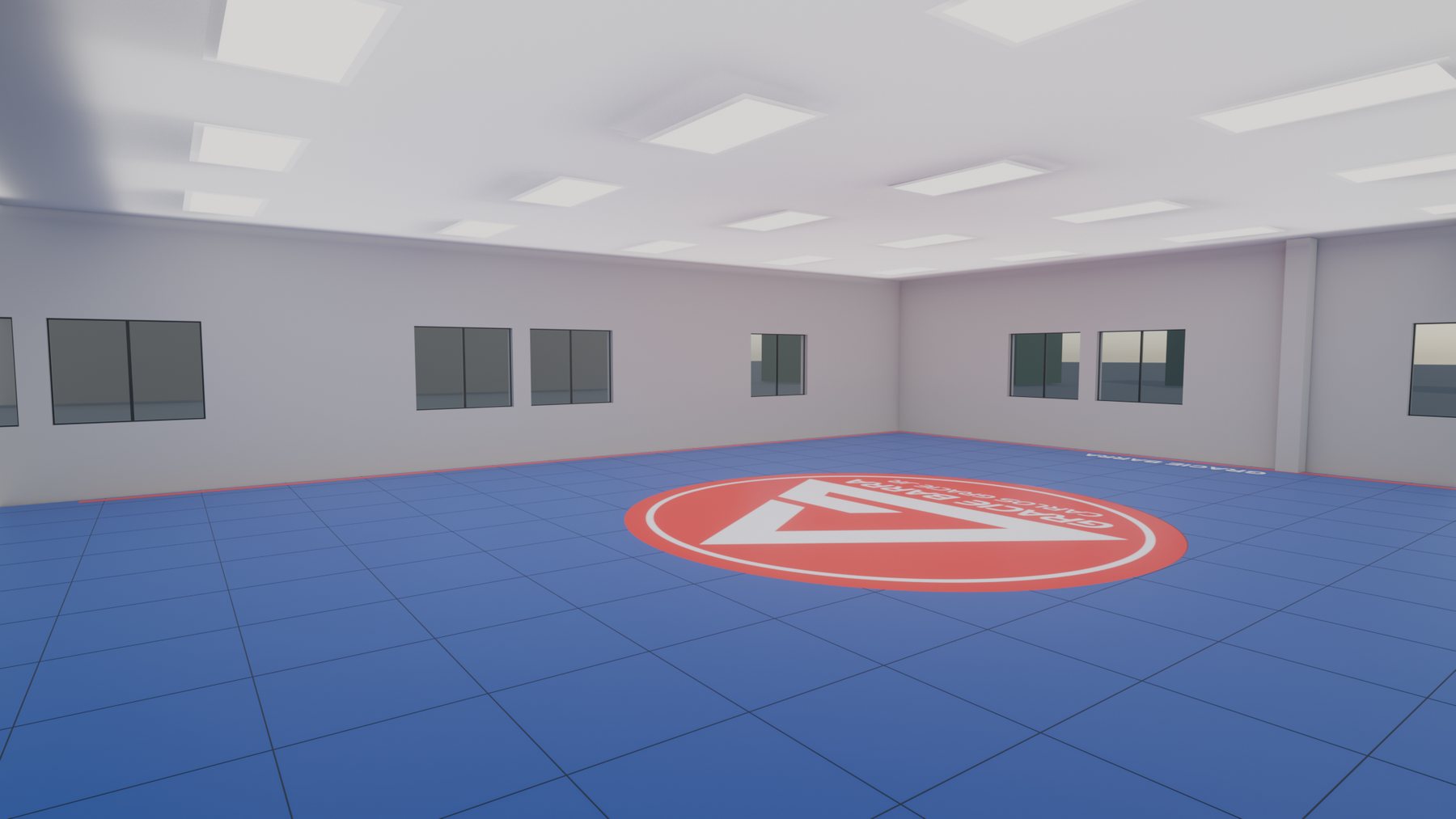
Around 2,850 sq ft of continuous mat — room for a full class and then some.
Pre-opening offer
20% off your first year
Register before we open and your discount is locked in for twelve months — for you, or for every child you enrol. No payment today.